
Every new tool brings the same prediction: the agencies are dead. Cloud didn't kill them. Open source didn't kill them. AI won't either. What AI is doing is more useful to watch. It's sorting agencies into two groups, and the difference between them matters a lot if you're about to hire one.
This is what we see working with B2B SaaS companies at TheIToons. It is also what we think every founder evaluating a design partnership should understand before signing anything.
What AI actually changed in 2026
Founders look at Midjourney, DALL-E, and Figma's AI features and ask a reasonable question: why pay an agency $15,000 for a brand identity when I can generate 500 logo concepts in an afternoon?
The answer hasn't changed. The hard part of design was always the decision-making. A generated logo is one starting point surrounded by 500 wrong directions. Someone still has to know which direction connects to your ICP, reinforces your positioning, and works on a business card, a dark-mode dashboard, and a conference banner.
What changed is how much of the production work AI can absorb. The value moved up the stack, toward the thinking that happens before any pixel is pushed.
What this means for the work, practically
Three things shifted in 2026 that affect every B2B SaaS design engagement:
1. Iteration cycles that used to take weeks now take days
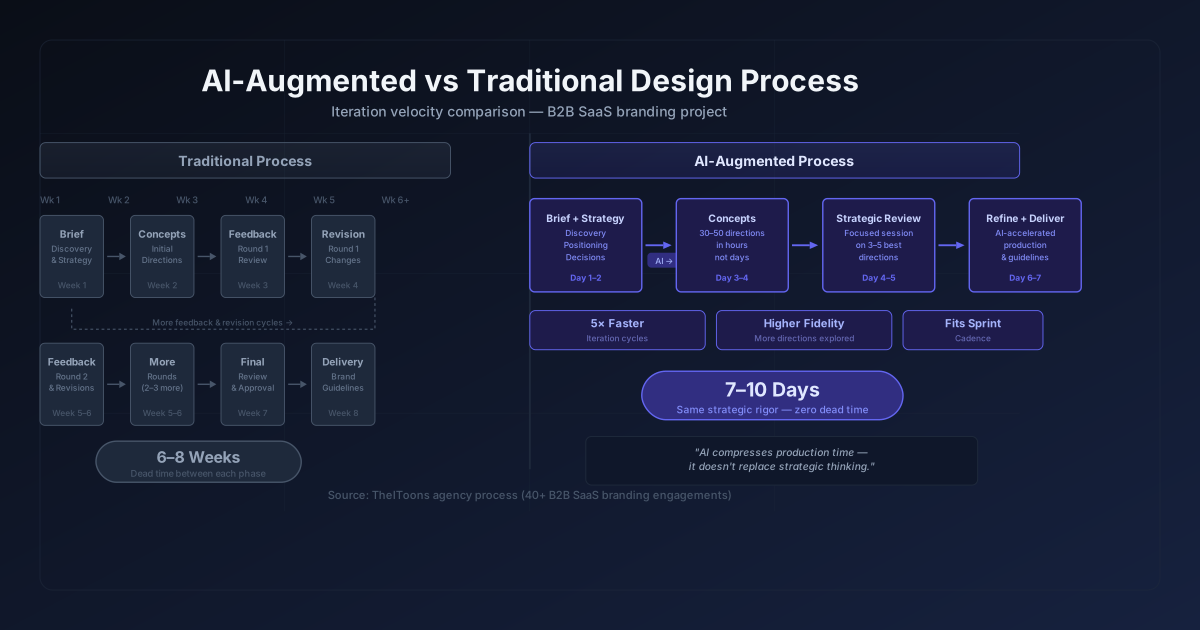
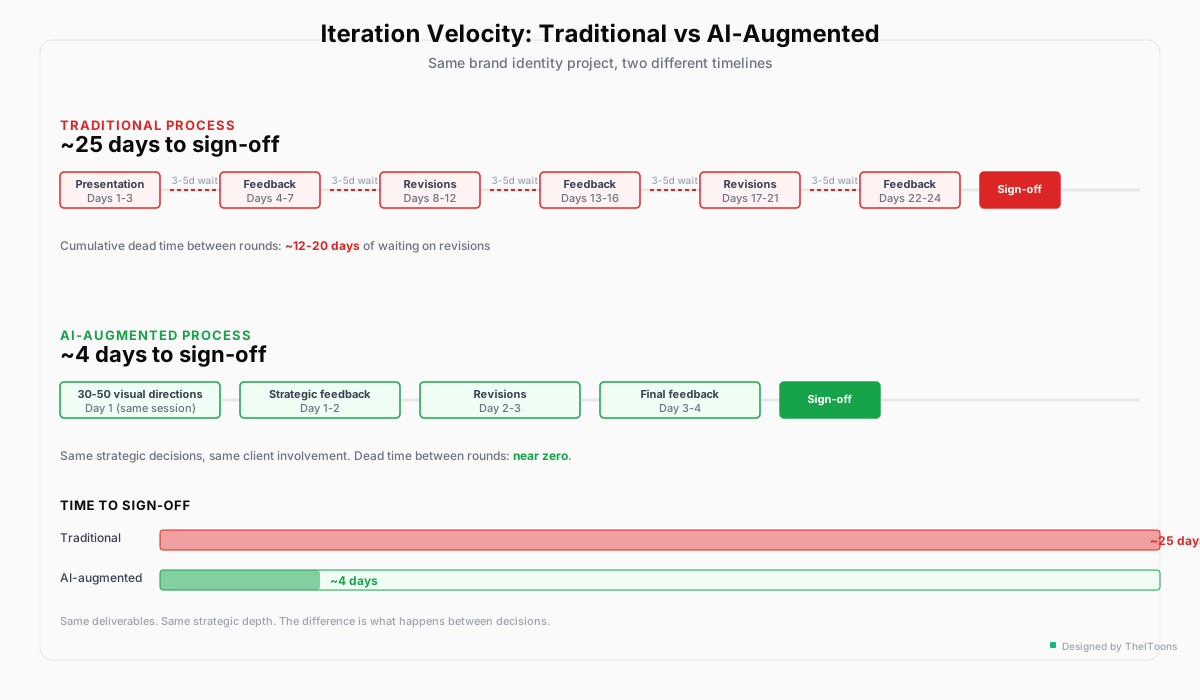
The biggest practical change is iteration velocity. A brand identity project used to go: presentation, feedback, revisions, second round of feedback, more revisions, sign-off. Each round had three to five days of dead time while work sat waiting for the next decision.
With AI tooling in the loop, we produce a meaningful set of visual directions in hours, not days. The feedback conversation still happens. The thinking still happens. The dead time between decisions and deliverables collapsed.
For a Seed or Series A startup, this matters. You don't have the luxury of two-week iteration cycles. A process that fits your sprint cadence beats one that produces marginally better output on a longer timeline.
2. The blank-page problem is mostly solved
Every senior designer knows the blank-page problem. It's not creative block. It's the paralysis of infinite options before you've produced anything.
AI works as a first-draft engine. It doesn't replace the designer's judgment, but it removes the most tedious part of early work: generating enough variety to have a real conversation with the client.
When we start a new brand identity project now, we generate 30 to 50 distinct visual directions in the first session. Not to pick one. To have a productive conversation about why some directions feel right and others don't. That conversation is the real strategic work. AI gets us there faster.
3. Personalization at scale is real now
This is the one that hits B2B SaaS companies building for multiple customer segments.
Historically, brand identity was one-to-one. You had guidelines and you applied them. If you needed to speak differently to a CFO versus a VP of Engineering, you did it through copy. Not design.
AI-augmented design tooling changes this. You can produce design systems that adapt by audience segment. Visual weight, color temperature, and layout rhythm shift based on who's looking, while the brand stays recognizable.
For B2B SaaS selling to multiple personas or industries, this is a real edge. A prospect who sees a product demo that looks like it was made for their industry converts differently. AI makes that level of personalization affordable.
AI-generated vs AI-augmented: this distinction matters
Not every agency calling itself "AI-powered" is the same thing. Two very different practices share that label.
AI-generated design is what most people picture when they hear "AI replacing designers." You type a prompt, you get an output. The human's job is prompt engineering and selection. Useful for production assets, stock work, and initial concept exploration. It has hard limits on strategic output.
AI-augmented design is what the best agencies do now. AI tools compress iteration cycles, generate directional variety, and handle production execution. Senior designers focus on strategic decisions, client judgment, and work that needs real business understanding.
The agencies that will matter to B2B SaaS founders over the next five years are the second group. Not the ones selling "faster, cheaper design."
Ask any agency you're evaluating two questions:
- How do you use AI in your design process, and where do you deliberately not use it?
- Who on the team does the strategic thinking, and is that person separate from the production team?
If the answer to the second question is "our senior designers do both strategy and production," that's a red flag. Strategy and production need different mindsets and different time. Good agencies already separate them. AI made that separation more viable, not less.
What this means for your branding project
If you're evaluating whether to engage a design agency in 2026, the honest frame is this:
AI made good agencies more valuable. It also made cheap agencies more obsolete.
An agency that was never particularly strategic, one that mostly executed your instructions and produced acceptable work, is now threatened. AI tools can do acceptable work faster and cheaper. You don't need to pay for that anymore.
An agency that was always doing the real value work, the positioning decisions, the strategic differentiation calls, the judgment about what your ICP responds to and why, is now more capable. Their strategic input gets to the right answer faster with AI tooling. Production quality goes up. Iteration speed improves.
The question isn't whether to use AI in your design process. It's whether the agency you hire knows where to use it and where human judgment is irreplaceable.
Where we draw the line at TheIToons
We're honest about this with prospects. It's served us better than overselling.
We use AI heavily in production. Generating visual variations, compressing iteration cycles, handling repetitive execution that doesn't need senior attention. Clients get faster timelines and more exploration for the same budget.
We don't use AI for strategic decisions. When we tell a B2B SaaS founder that their positioning needs to change before their visual identity will matter, that's a human call backed by competitive analysis, customer research, and pattern recognition from 40+ similar engagements. AI can't do that work reliably yet.
The combination is what makes the work good. Faster execution plus unchanged strategic rigor. That's what founders should be looking for.
Working with an agency that uses AI the right way
If you're a B2B SaaS founder evaluating your brand, product design, or growth design needs, we'd like to be part of the conversation.
At TheIToons, we work with Series A and Series B SaaS companies who need more than a pretty brand. We work on positioning, differentiation, and the design system that makes both stick across every surface.
If you're not ready to talk yet, subscribe below. We send one email a week on B2B SaaS design, branding, and what actually works for growth-stage companies. No fluff, no sales sequence.