
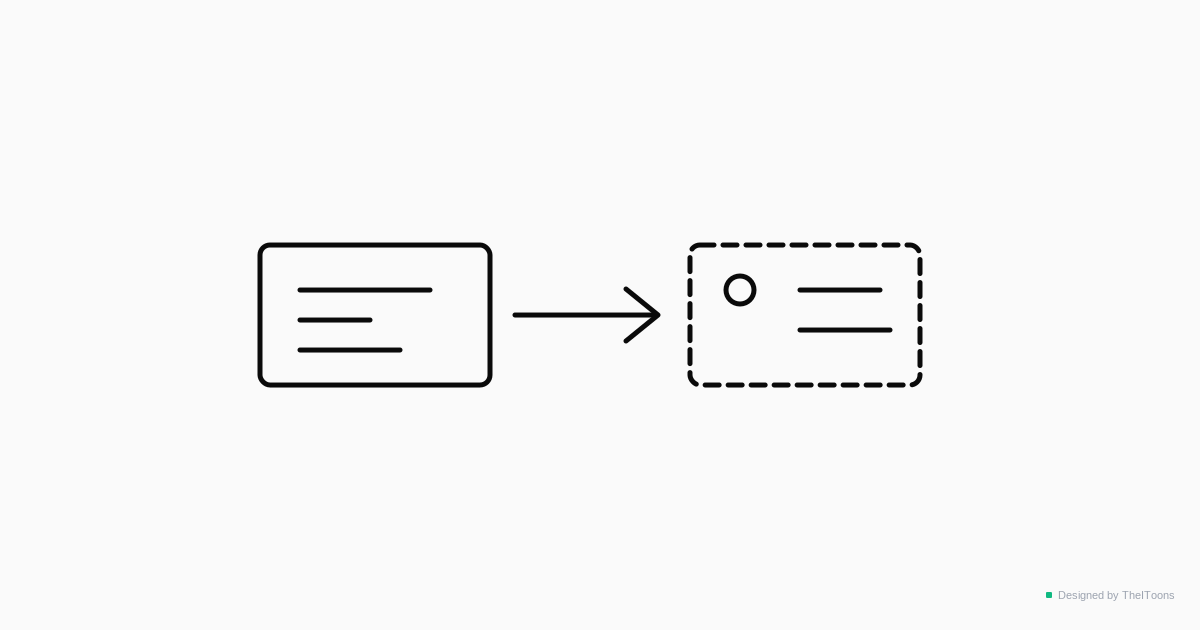
Strategy comes first. Every time. Identity is the expression of a decision you have already made. Design before you decide and you are decorating a guess.
This is the most-searched question in branding, and almost every answer online gets it half right. They tell you strategy is the "why" and identity is the "what." True. Also useless — it doesn't help you decide what to invest in, in what order, or which one you actually need this quarter.
Here's the version that does.
The direct answer
Brand strategy is the set of decisions about who you are for, what you promise, and why anyone should choose you over the alternative. Brand identity is how those decisions become visible — logo, type, colour, voice, layout. Strategy comes first because identity without strategy is just aesthetics, and aesthetics can't be argued for, defended, or tested. You can only evaluate a design against a decision you've already made.
What's the actual difference?
| Brand strategy | Brand identity | |
|---|---|---|
| What it is | Decisions: audience, positioning, promise, point of view | Expression: logo, type, colour, voice, layout, motion |
| Answers | Who is this for, and why us? | What does it look like and sound like? |
| Deliverable | Positioning statement, messaging pillars, audience definition | Visual system, brand guidelines, asset library |
| Failure looks like | Vague, forgettable, competing on price | Beautiful but generic — could be any competitor |
| Cost of getting it wrong | You build the wrong thing well | You rebuild everything downstream |
| Can it be A/B tested? | Not directly | Constantly |
Read the last row twice. It's the whole reason the order matters.
Why almost every answer gets this half right
The "why vs what" framing is technically correct and practically useless. It treats the two as equal partners in a single exercise, which is how you end up with a founder briefing a designer on a logo and a positioning statement in the same conversation.
They are not equal partners. They are sequential. One is a decision, the other is a translation.
The tell is always the same. Ask a founder "who is this for?" and if the answer is "anyone who needs X," no amount of design work will save the project. You'll get something tasteful and forgettable — the visual equivalent of a shrug. We've been handed that brief. We've also had to say no to it, because we're not going to spend two weeks making a shrug look expensive.
What brand strategy actually is (it isn't a deck)
Brand strategy is four decisions, written down:
- Who it's for. Not a demographic — a situation. "Series A founders whose product outgrew their website" beats "B2B decision makers."
- What it promises. One sentence a customer could repeat to a friend without mangling it.
- Why you and not the alternative. The alternative is usually nothing — doing it in-house, or not at all. Not your competitor.
- What you will never do. The boundaries. This is the part everyone skips and the part that actually creates a brand.
That's it. A strategy that runs to forty slides is a strategy nobody will use. The test isn't whether it reads well in a workshop. It's whether a new hire could make a decision with it on a Tuesday afternoon without asking anyone.
What brand identity actually is (it isn't a logo)
Identity is the translation layer. Logo, yes — but also the type you set, the colours you allow yourself, how you write a button label, how an empty state reads, what your invoices look like.
The logo is maybe 5% of it and gets 95% of the attention because it's the only part clients can point at.
A real identity does something a logo can't: it makes decisions repeatable. When it's working, you don't need a designer to approve every new page. The system already knows what to do. That's the difference between brand guidelines as a PDF nobody opens and a system people actually build with.
Which comes first — and how to tell where you are
Run this diagnostic before you brief anyone.
You need strategy first if:
- Your homepage could describe three of your competitors with the word swapped
- You've said "we're more premium" but can't say what that changes about your product
- Sales conversations start with a discount
- You've rebranded in the last two years and it didn't fix the problem
- You can't explain your pricing without apologising
You can go straight to identity if:
- You can state your audience, promise, and difference in one breath
- You're already winning deals on something other than price
- You know exactly what you'd refuse to do for money
You need both, at once, if:
- You're pre-launch and the identity has to earn trust before you have any
- You're entering a crowded category where sameness is the default
Notice what isn't on the list: how your logo looks. Nobody has ever needed a strategy because their logo felt tired. That's a different problem.
The cost of getting the order wrong
Getting it wrong is expensive in a specific, predictable way.
You commission the identity. It's good work — the designer did their job. Six months later, the site isn't converting. So you change the site. Then the messaging. Then you decide the real problem is that you're targeting the wrong segment. Now you need a new identity, because the old one was built for an audience you've abandoned.
You paid for the identity twice and burned six months.
The reverse order costs less. Strategy is cheaper than identity — usually by a factor of two or three — and it's the only part that survives a pivot. Get the audience wrong and you've wasted a document. Get the identity wrong and you've wasted the document, the design, the site, the deck, and the launch.
How long does it take, and what does it cost?
Real numbers, because "it depends" is a non-answer.
| Strategy | Identity | |
|---|---|---|
| Typical timeline | 1–3 weeks | 3–6 weeks |
| Typical cost (studio) | $2,000–$8,000 | $5,000–$30,000 |
| What slows it down | Founder disagreement | Committee feedback |
| What speeds it up | One decision-maker | One decision-maker |
The single biggest variable in both columns is the same: how many people have to agree. A studio with one approver ships in half the time of a studio with a committee, and the work is better for it.
We do strategy and identity as one engagement, and we've shipped the pair in under three weeks. That's not a promise that it's always right — it's a demonstration that the timeline is usually set by process, not by craft.
"Brand strategy vs marketing strategy" — a different question people confuse
Same trap, different pair.
Marketing strategy decides where you show up, what you say, and what it costs to say it. Brand strategy decides what you stand for. Marketing without brand strategy optimises you into a commodity — it will find the cheapest message that converts, and that message is almost always a discount.
Brand without marketing is a beautiful website nobody visits.
You need both. Brand first, because marketing strategy is the thing you point at a market once you've decided what you're selling and to whom.
Frequently Asked Questions
1. Which comes first, brand strategy or brand identity? Strategy. Identity expresses decisions that already exist. If you design first, you're guessing in public.
2. Can you do brand identity without brand strategy? You can, and people do constantly. The result is attractive and interchangeable — work that could belong to any competitor in the category.
3. How long should brand strategy take? One to three weeks for a focused studio engagement. If it's taking months, the bottleneck is decision-making, not research.
4. Is a logo part of brand identity? Yes, but it's a small part. Type, colour, voice, layout, and how the brand behaves in product matter more to whether it feels consistent.
5. How much does brand identity cost? Studios typically charge $5,000–$30,000. Below that you're buying a logo, not a system. Above it, you're usually paying for a bigger team, not a better outcome.
6. Do I need a new brand if I'm just changing my audience? No — you need a strategy. And you may need a new identity afterwards, because the old one was built for the audience you just left.
Where this lands for us
We build the strategy and the identity in one engagement, then ship the website that carries them. Not because it's tidier — because the decisions and the expression get made by the same people, in the same room, without a handover where the reasoning gets lost.
Start with the decision. Then make it look like something.